Published for educational awareness | Health & Public Safety Information
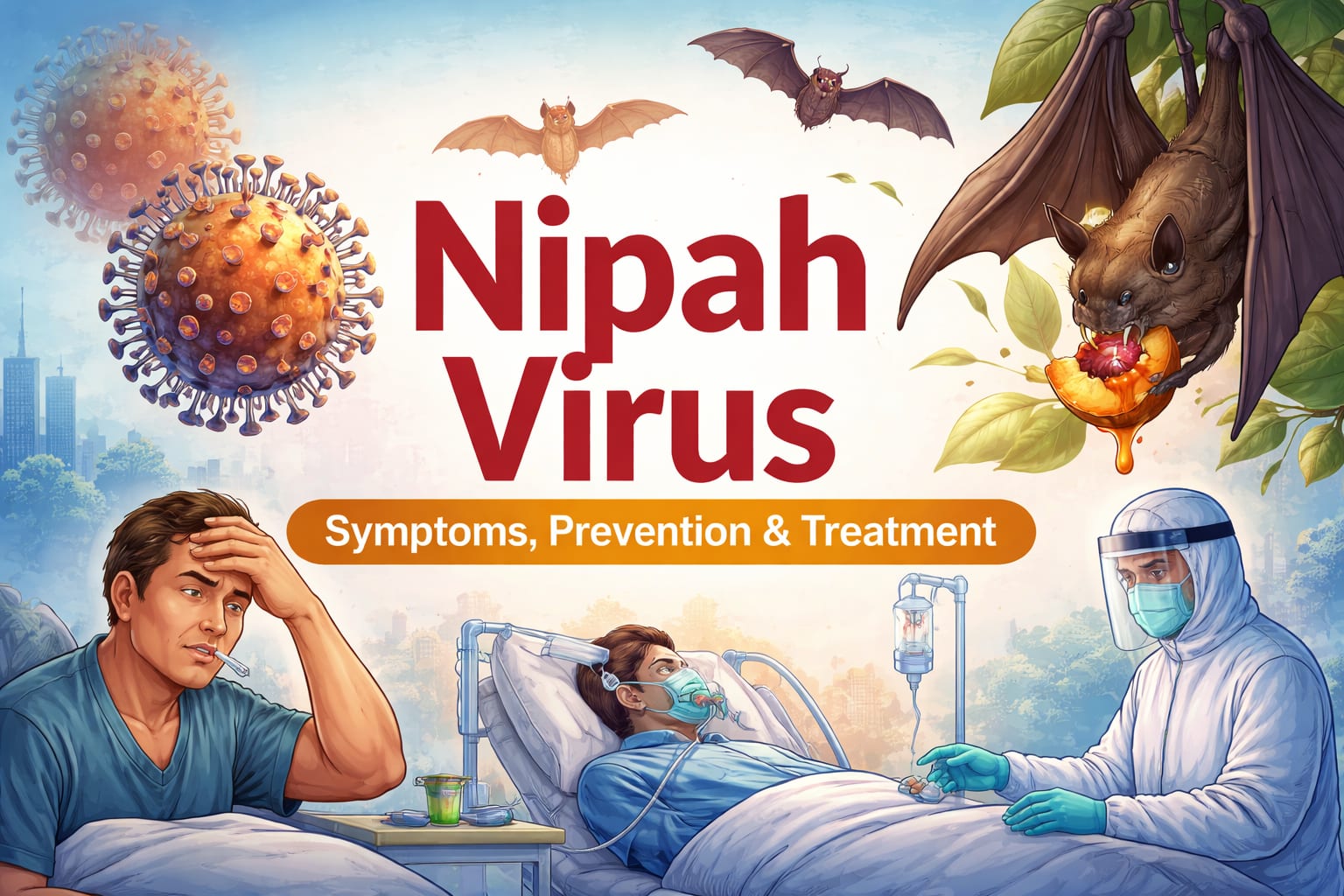
The Nipah virus is a highly dangerous and emerging zoonotic virus that has raised serious public health concerns in several countries, especially in South and Southeast Asia. Known for its high fatality rate and lack of a specific cure, the Nipah virus has been responsible for multiple outbreaks, causing severe illness and death in humans.
This detailed guide aims to provide complete and accurate information about the Nipah virus in a simple and easy-to-understand manner. The article covers its origin, causes, transmission methods, symptoms, diagnosis, treatment options, prevention strategies, and global impact. The purpose of this blog is awareness and education, not fear.
Understanding the Nipah virus is crucial for early detection, prevention, and community safety. With increasing human-animal interaction and environmental changes, such emerging viruses pose a long-term risk if not addressed through proper awareness and preparedness.
Table of Contents
- What is Nipah Virus?
- History and Origin of Nipah Virus
- Natural Reservoir and Host Animals
- How Nipah Virus Spreads
- Symptoms of Nipah Virus Infection
- Diagnosis and Detection
- Treatment and Medical Management
- Prevention and Safety Measures
- Nipah Virus in India
- Global Impact and Future Risks
- Common Myths and Facts
- Conclusion and Awareness Message
What is Nipah Virus?
Nipah virus is a zoonotic virus, which means it can be transmitted from animals to humans. It belongs to the Henipavirus genus and the Paramyxoviridae family. The virus is known for causing severe respiratory illness and fatal brain inflammation (encephalitis).
One of the most concerning aspects of the Nipah virus is its high mortality rate, which can range from 40% to more than 75% depending on the outbreak and healthcare response. Unlike many common viral infections, Nipah virus does not have a specific antiviral treatment or widely available vaccine.
The virus primarily spreads through direct contact with infected animals, contaminated food, or human-to-human transmission in healthcare or family settings. Because symptoms can appear days or even weeks after exposure, early detection becomes difficult, increasing the risk of spread.
History and Origin of Nipah Virus
The Nipah virus was first identified in 1998 during an outbreak in Malaysia and Singapore. The outbreak primarily affected pig farmers and people involved in the pig farming industry. The virus was named after the village of Sungai Nipah in Malaysia, where one of the first cases was detected.
Initially, the disease was misdiagnosed as Japanese Encephalitis, which delayed appropriate control measures. Once identified as a new virus, mass culling of pigs was carried out to control the outbreak. This resulted in significant economic losses but helped contain the spread.
Since then, Nipah virus outbreaks have been reported in countries such as Bangladesh and India, often showing different patterns of transmission, including direct human-to-human spread.
Natural Reservoir and Host Animals
The natural reservoir of the Nipah virus is fruit bats, particularly those belonging to the Pteropus species, also known as flying foxes. These bats carry the virus without showing symptoms and play a major role in its transmission.
The virus can spread from bats to humans either directly or indirectly through intermediate animals such as pigs. Consumption of fruits or fruit products contaminated with bat saliva or urine is one of the known transmission routes.
Bats are essential to ecosystems, and eliminating them is neither practical nor environmentally safe. Therefore, prevention focuses on minimizing human exposure rather than targeting wildlife.
How Nipah Virus Spreads
The Nipah virus spreads through multiple transmission routes, making it particularly dangerous during outbreaks. Unlike many viruses that spread only through air or touch, Nipah virus transmission involves animals, food sources, and close human contact.
Understanding these transmission pathways is essential for prevention and outbreak control, especially in high-risk regions.
1. Animal to Human Transmission
The most common source of Nipah virus infection is direct or indirect contact with infected animals. Fruit bats are the primary carriers, and the virus can be transmitted to humans through:
- Consumption of fruits contaminated with bat saliva or urine
- Drinking raw date palm sap contaminated by bats
- Handling infected animals such as pigs
- Exposure to animal secretions or bodily fluids
In earlier outbreaks, pigs acted as intermediate hosts, amplifying the virus and transmitting it to farmers and slaughterhouse workers.
2. Human to Human Transmission
Human-to-human transmission of Nipah virus has been confirmed in several outbreaks, particularly in healthcare and household settings. The virus spreads through close contact with infected individuals, especially when proper protective measures are not followed.
- Contact with respiratory droplets
- Exposure to saliva, blood, or urine of infected persons
- Caring for infected patients without protective equipment
- Sharing personal items with infected individuals
Healthcare workers and family caregivers are at higher risk during outbreaks, highlighting the importance of infection control practices.
Incubation Period of Nipah Virus
The incubation period of the Nipah virus typically ranges from 4 to 14 days, but in some cases, symptoms may appear after 30 to 45 days. This long incubation period makes tracking and isolating cases challenging.
During this period, infected individuals may not show any symptoms but can still spread the virus to others, particularly through close contact.
Because of this delayed symptom onset, health authorities often recommend extended monitoring and quarantine of individuals who may have been exposed to the virus.
Symptoms of Nipah Virus Infection
Nipah virus infection presents a wide range of symptoms, which can progress rapidly from mild illness to severe and life-threatening conditions. Early recognition of symptoms is critical for timely medical intervention.
Early Symptoms
- Fever
- Headache
- Muscle pain
- Fatigue and weakness
- Sore throat
- Nausea and vomiting
These early symptoms are often mistaken for common viral infections, which can delay diagnosis and increase the risk of spread.
Respiratory Symptoms
- Cough
- Shortness of breath
- Difficulty breathing
- Chest discomfort
Respiratory involvement increases the risk of human-to-human transmission and often signals a more severe form of the disease.
Neurological Symptoms
- Dizziness
- Altered mental state
- Confusion and disorientation
- Seizures
- Loss of consciousness
Severe cases can lead to encephalitis, a dangerous inflammation of the brain, which is often fatal or results in long-term neurological complications.
Why is the Nipah Virus Fatality Rate So High?
The high fatality rate associated with Nipah virus infection is due to a combination of factors, including delayed diagnosis, lack of specific treatment, and rapid disease progression.
- No specific antiviral drug or approved vaccine
- Severe brain inflammation and respiratory failure
- Limited awareness during early stages of outbreaks
- Challenges in rural healthcare access
Survivors may also experience long-term neurological effects, including memory loss, personality changes, and difficulty performing daily activities.
Diagnosis and Detection of Nipah Virus
Early and accurate diagnosis of Nipah virus infection plays a critical role in controlling outbreaks and improving patient outcomes. Due to its similarity with other viral illnesses in the early stage, laboratory confirmation is essential.
Doctors usually consider Nipah virus infection when patients present with fever, respiratory symptoms, or neurological signs and have a history of exposure to infected animals, contaminated food, or confirmed cases.
Laboratory Tests Used for Diagnosis
- Reverse Transcriptase Polymerase Chain Reaction (RT-PCR)
- Enzyme-Linked Immunosorbent Assay (ELISA)
- Virus isolation in specialized laboratories
- Serological testing for antibodies
These tests are conducted on samples such as blood, throat swabs, cerebrospinal fluid, or urine. Due to the high risk associated with handling the virus, testing is performed in high-security biosafety laboratories.
Imaging tests like CT scans or MRI may also be used to assess brain inflammation in patients showing neurological symptoms.
Treatment and Medical Management
Currently, there is no specific antiviral medication or approved vaccine available for the treatment of Nipah virus infection. Medical care focuses primarily on supportive treatment and managing symptoms.
Patients suspected or confirmed to have Nipah virus infection are immediately isolated to prevent further transmission.
Supportive Treatment Includes
- Maintaining hydration and electrolyte balance
- Managing fever and pain
- Providing oxygen therapy
- Mechanical ventilation for respiratory failure
- Control of seizures and neurological complications
Intensive Care Unit (ICU) support is often required in severe cases. Early hospitalization significantly improves the chances of survival.
Experimental and Investigational Therapies
Some antiviral drugs and monoclonal antibodies have shown promise in laboratory or animal studies, but they are not yet widely approved for public use.
Research efforts are ongoing worldwide to develop effective treatments and vaccines to combat future outbreaks.
Role of Healthcare Systems During Nipah Outbreaks
Healthcare systems play a vital role in preventing the spread of Nipah virus. Rapid identification, isolation, and management of cases are essential to control outbreaks.
Hospitals and clinics must follow strict infection control measures to protect healthcare workers and other patients.
Key Healthcare Measures
- Use of personal protective equipment (PPE)
- Isolation wards for infected patients
- Strict hand hygiene and sanitation protocols
- Safe disposal of medical waste
- Training healthcare workers in outbreak response
Contact tracing is conducted to identify individuals who may have been exposed, followed by quarantine and health monitoring.
Public health authorities also play an important role by issuing guidelines, conducting awareness campaigns, and coordinating with local and international health organizations.
Recovery and Long-Term Health Effects
Recovery from Nipah virus infection varies depending on the severity of the illness. While some patients recover completely, others may experience long-term complications.
- Memory and concentration problems
- Personality or behavioral changes
- Persistent fatigue
- Seizure disorders
Long-term follow-up and rehabilitation may be required for survivors, especially those who suffered from encephalitis.
Prevention and Safety Measures
Since there is currently no specific vaccine or cure for Nipah virus infection, prevention remains the most effective strategy to reduce the risk of outbreaks. Preventive measures focus on minimizing exposure to the virus and controlling its spread in communities and healthcare settings.
Personal Safety Measures
- Avoid consuming raw or unprocessed date palm sap
- Wash fruits thoroughly before eating
- Avoid eating fruits that appear bitten or damaged
- Practice regular hand hygiene with soap and water
- Avoid close contact with individuals showing symptoms
Community-Level Prevention
- Cover date palm sap collection containers
- Educate communities about transmission risks
- Report unusual illness or animal deaths promptly
- Restrict access to outbreak-affected areas
Awareness campaigns and community participation play a critical role in preventing the spread of Nipah virus, especially in rural and high-risk regions.
Nipah Virus Outbreaks in India
India has experienced several Nipah virus outbreaks, primarily in the state of Kerala. The first confirmed outbreak occurred in 2018, followed by additional cases in subsequent years.
Indian outbreaks have mostly involved human-to-human transmission rather than animal-to-human transmission, highlighting the importance of infection control in healthcare settings.
The rapid response by Indian health authorities, including contact tracing, isolation, and public awareness, helped control the outbreaks and reduce further spread.
These incidents demonstrated the importance of preparedness, surveillance, and inter-agency coordination in managing emerging infectious diseases.
Global Impact and Future Risks
Although Nipah virus outbreaks have been geographically limited so far, the virus is considered a global health threat due to its high fatality rate and potential for human-to-human transmission.
Factors such as deforestation, climate change, urbanization, and increased interaction between humans and wildlife contribute to the risk of future outbreaks.
The World Health Organization has listed Nipah virus as a priority disease, emphasizing the need for research, vaccine development, and international cooperation.
Strengthening public health infrastructure and early warning systems is essential to prevent widespread outbreaks in the future.
Common Myths and Facts About Nipah Virus
Misinformation can cause unnecessary panic during outbreaks. Understanding facts helps people take appropriate precautions without fear.
- Myth: Nipah virus spreads through air over long distances
Fact: It spreads mainly through close contact and bodily fluids - Myth: Eating any fruit causes Nipah infection
Fact: Only contaminated fruits pose a risk - Myth: Nipah virus is always fatal
Fact: Early medical care improves survival chances - Myth: Killing bats will stop the virus
Fact: Bats are vital to ecosystems and should not be harmed
Conclusion and Awareness Message
The Nipah virus is a serious but preventable public health threat. With accurate information, early detection, and responsible behavior, the risk of infection can be significantly reduced.
Governments, healthcare systems, and communities must work together to strengthen surveillance, promote awareness, and ensure rapid response during outbreaks.
Staying informed, following public health guidelines, and avoiding misinformation are key steps in protecting individuals and society from emerging infectious diseases like the Nipah virus.








Discussion
0 comments
No comments yet. Be the first to share your thoughts!