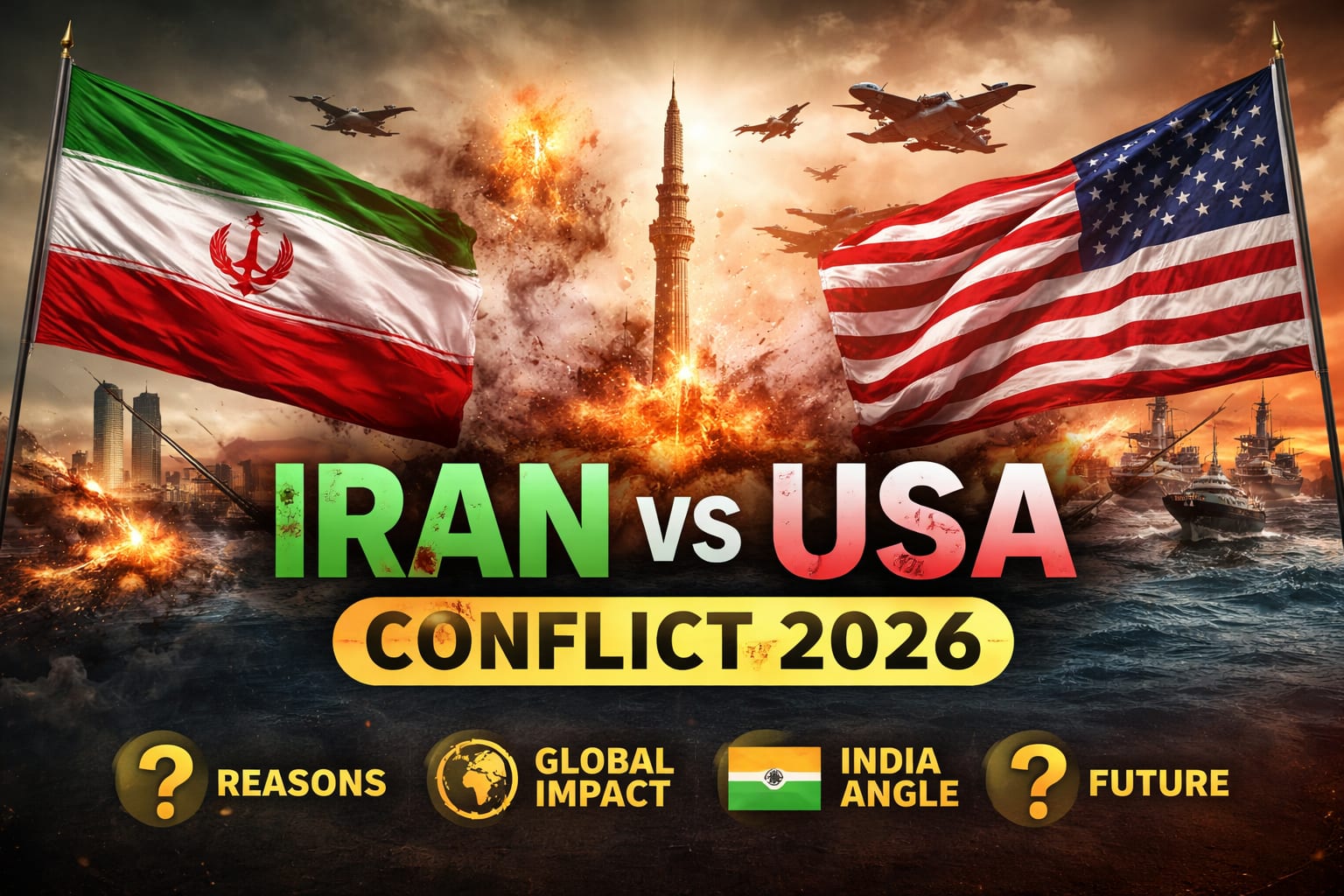
The rising tension between Iran and the United States has once again captured global attention in 2026. From military warnings to economic disruptions, this conflict is not just about two countries—it has the potential to influence the entire world. Many people are asking questions like: What is really happening? Why are Iran and the USA in conflict? Could this lead to a larger war?
In this detailed blog, we will break down the complete reality of the Iran–USA conflict in simple language. We will explore its history, current situation, global impact, and what it could mean for countries like India. This blog is written in a neutral and informative way to help readers understand the truth without confusion.
Table of Contents
1. Background of Iran–USA Relations
The conflict between Iran and the United States did not start recently. Its roots go back several decades. Before 1979, Iran and the USA actually had a strong relationship. The United States supported Iran’s monarchy under Shah Mohammad Reza Pahlavi.
However, everything changed after the Iranian Revolution in 1979. The monarchy was overthrown, and Iran became an Islamic Republic. The new government strongly opposed Western influence, especially that of the United States.
One of the most significant events during this period was the Iran Hostage Crisis, where American diplomats were held hostage in Tehran for 444 days. This incident deeply damaged the relationship between the two countries.
Since then, Iran and the USA have remained rivals, often disagreeing on political, military, and economic matters.
2. Main Reasons Behind the Conflict
There are several key reasons why tensions between Iran and the United States continue to rise. Understanding these reasons helps us see the bigger picture.
a) Nuclear Program
One of the biggest concerns for the United States is Iran’s nuclear program. The USA and its allies believe that Iran may be developing nuclear weapons, while Iran claims its program is for peaceful purposes like energy generation.
b) Sanctions and Economic Pressure
The United States has imposed strict economic sanctions on Iran to limit its financial power. These sanctions have affected Iran’s economy significantly, leading to tensions and strong reactions from the Iranian government.
c) Middle East Influence
Both Iran and the USA want influence in the Middle East region. Iran supports certain groups and governments, while the USA supports others. This creates indirect conflicts in countries like Syria, Iraq, and Yemen.
d) Military Presence
The presence of US military forces in the Middle East is another major issue. Iran sees this as a threat to its security, while the USA claims it is necessary for regional stability.
3. Key Events Timeline
Over the years, several important events have shaped the Iran–USA conflict:
- 1979 – Iranian Revolution and Hostage Crisis
- 1980s – Iran-Iraq War with indirect US involvement
- 2000s – Rising concerns over Iran’s nuclear program
- 2015 – Nuclear Deal (JCPOA) agreement
- 2018 – USA withdraws from nuclear deal
- 2020 – Killing of Iranian General Qasem Soleimani
- 2026 – Rising tensions and possible military escalation
Each of these events has increased distrust and hostility between the two nations, making the situation more complex over time.
4. Current Situation in 2026
In 2026, the tension between Iran and the United States has reached a very sensitive stage. While it is not officially declared as a full-scale war, many experts believe that the situation is closer to a conflict than ever before. Military movements, strategic warnings, and rising global concern have made this issue one of the most discussed topics worldwide.
Both countries have increased their military readiness in the Middle East region. The United States has strengthened its naval and air force presence, while Iran has also prepared its defense systems and regional allies. This kind of buildup often signals a high-risk environment where even a small incident can lead to a major confrontation.
a) Military Escalation
Military activities have increased significantly. Reports suggest that both sides have conducted drills and operations near strategic locations like the Persian Gulf. These areas are extremely important because a large portion of the world’s oil supply passes through them.
There have also been incidents involving drones, missiles, and surveillance activities. While not always confirmed officially, such incidents increase tension and create fear of sudden escalation.
Experts believe that modern warfare may not always start with a large attack. Instead, it can begin with small targeted actions that gradually increase in intensity.
b) Oil Prices and Economic Impact
One of the biggest global effects of the Iran–USA conflict is on oil prices. The Middle East is a major supplier of oil, and any instability in this region directly affects global markets.
As tensions rise, oil prices tend to increase because of uncertainty in supply. Countries that depend heavily on oil imports, including India, feel the impact through higher fuel prices, transportation costs, and inflation.
Even the fear of conflict is enough to disturb markets. Investors become cautious, and this leads to fluctuations in stock markets and currencies worldwide.
c) Cyber Warfare and Digital Threats
In modern times, conflicts are not limited to physical attacks. Cyber warfare has become an important part of global tensions. Both Iran and the United States are believed to have strong cyber capabilities.
Cyber attacks can target critical systems such as banking, communication networks, power grids, and government databases. These attacks are often difficult to trace and can cause serious disruption without any physical damage.
In recent times, there have been reports of increased cyber activities, although exact details are often kept confidential for security reasons.
d) Reactions from Other Countries
The Iran–USA conflict is not just limited to these two countries. Many nations around the world are closely monitoring the situation and responding carefully.
Countries like China and Russia have shown support for diplomatic solutions and have criticized aggressive actions. On the other hand, many Western countries support the United States but also encourage peaceful negotiations.
International organizations are also trying to reduce tensions and promote dialogue. However, due to the complex nature of global politics, finding a solution is not easy.
Smaller countries are especially concerned because they are more vulnerable to economic shocks and global instability caused by such conflicts.
Overall, the current situation in 2026 shows a high level of tension with multiple risk factors. While a full-scale war has not started, the possibility cannot be completely ignored. The next section will explore how this conflict is impacting the global economy and daily life across different countries.
5. Global Impact of the Conflict
The Iran–USA conflict is not just a regional issue; it has wide-reaching effects across the globe. From economic instability to changes in daily life, the impact can be seen in multiple areas. Even countries that are not directly involved in the conflict feel its consequences.
a) Global Economic Instability
One of the most immediate effects of rising tensions is economic instability. Global markets react quickly to uncertainty, and conflicts between powerful nations create fear among investors. Stock markets often show sudden ups and downs, and currencies may weaken or strengthen unexpectedly.
Businesses also become cautious during such times. Companies may delay investments, reduce expansion plans, or shift their operations to safer regions. This slows down global economic growth and can affect job opportunities.
b) Trade and Supply Chain Disruptions
The Middle East plays a crucial role in global trade, especially in the energy sector. Any disruption in this region affects supply chains worldwide. Shipping routes can become risky, insurance costs increase, and delivery times may be delayed.
Industries that depend on imported raw materials or fuel are especially affected. For example, manufacturing, transportation, and logistics sectors may face higher costs and reduced efficiency.
These disruptions eventually impact consumers, as the cost of goods and services increases.
c) Rising Inflation
As oil prices increase and supply chains are affected, inflation becomes a major concern. Higher fuel prices lead to increased transportation costs, which then raise the price of everyday products such as food, clothing, and essential goods.
Inflation reduces the purchasing power of people, making it harder for households to manage their expenses. This is especially challenging for middle-class and lower-income families.
d) Technology and Security Concerns
In today’s digital world, conflicts also affect technology and cybersecurity. Governments and organizations increase their focus on protecting sensitive data and critical systems.
There is a higher risk of cyber attacks targeting banks, communication systems, and infrastructure. As a result, companies invest more in cybersecurity, which increases operational costs.
Tech companies may also face restrictions on partnerships, data sharing, and global operations due to political tensions.
e) Impact on Daily Life
Although the conflict may seem far away, it can still affect everyday life. People may notice rising fuel prices, increased cost of goods, and economic uncertainty.
Travel plans can be affected due to safety concerns or higher costs. Job markets may become unstable, and businesses may slow down hiring.
In addition, constant news about global tensions can create stress and चिंता among people, especially when discussions about possible war increase.
Overall, the global impact of the Iran–USA conflict is significant and far-reaching. It affects economies, industries, and individuals in different ways. In the next section, we will specifically look at how this conflict impacts India and why it is important for Indian citizens to understand this situation.
6. Impact on India
India is one of the fastest-growing economies in the world, and it is also highly dependent on global markets, especially for energy resources like crude oil. Because of this, any major conflict in the Middle East, including the Iran–USA tension, directly or indirectly affects India in multiple ways.
a) Dependence on Oil Imports
India imports a large portion of its crude oil from the Middle East. When tensions rise between Iran and the United States, oil supply routes may become unstable. Even if supply is not fully disrupted, the fear of disruption increases oil prices globally.
As a result, India has to pay more for oil imports, which directly affects the country’s economy and increases the financial burden.
b) Rising Petrol and Diesel Prices
One of the most visible effects for Indian citizens is the increase in petrol and diesel prices. When crude oil becomes expensive in the international market, fuel prices in India also rise.
Higher fuel prices affect transportation costs, which then increase the price of goods and services. This leads to a chain reaction that impacts daily expenses for common people.
c) Inflation and Cost of Living
Rising fuel costs contribute to inflation in the country. Essential items such as food, vegetables, and household goods may become more expensive. This increases the cost of living and affects the overall financial stability of families.
Inflation can also reduce savings and make it harder for people to manage their monthly budgets.
d) Impact on Trade and Businesses
Indian businesses that depend on imports, exports, or international trade may face challenges due to global instability. Shipping costs can increase, delivery times may become longer, and profit margins can be affected.
Industries such as aviation, logistics, manufacturing, and e-commerce are particularly sensitive to fuel price changes and global supply disruptions.
e) Indian Workers in the Middle East
A large number of Indian citizens work in Middle Eastern countries. If the conflict escalates, their safety and job security could be at risk.
In extreme situations, the Indian government may need to take steps to evacuate its citizens or provide support. Such operations can be complex and challenging.
f) Government Measures and Strategy
The Indian government usually takes a balanced and diplomatic approach in such situations. It focuses on maintaining good relations with both Iran and the United States while protecting national interests.
India may also look for alternative oil suppliers, increase strategic reserves, and take steps to control inflation. These measures help reduce the impact of global conflicts on the domestic economy.
Overall, the Iran–USA conflict has a noticeable impact on India’s economy, businesses, and daily life. While the country is not directly involved in the conflict, its effects are clearly visible. In the next section, we will explore possible future scenarios and whether this conflict could lead to a larger global crisis.
7. Future Possibilities
The future of the Iran–USA conflict remains uncertain. While there are signs of rising tension, there are also efforts being made to avoid a full-scale war. The direction this situation takes will depend on political decisions, diplomatic talks, and global pressure.
a) Possibility of Full-Scale War
One possible scenario is a direct military conflict between Iran and the United States. This could involve air strikes, naval battles, and attacks on strategic locations. However, such a war would have serious consequences not only for these two countries but for the entire world.
A full-scale war could disrupt global trade, increase oil prices dramatically, and create instability in multiple regions. Because of these risks, most countries are trying to prevent such an outcome.
b) Limited Conflict or Proxy War
Another possibility is a limited conflict or proxy war. In this situation, both countries avoid direct confrontation but support different groups or allies in the region. This type of conflict can continue for a long time without turning into a full-scale war.
This has already been seen in parts of the Middle East, where indirect conflicts take place through local groups and regional alliances.
c) Diplomatic Resolution
The most positive outcome would be a diplomatic resolution. Through negotiations and international mediation, both countries could reach agreements on key issues such as nuclear programs and regional security.
While this may seem difficult, history has shown that dialogue and agreements are possible, as seen in past negotiations. A peaceful solution would benefit not only Iran and the USA but the entire global community.
d) Is There a Risk of World War 3?
One of the most common questions people ask is whether this conflict could lead to World War 3. While the situation is serious, experts believe that a global war is unlikely at this stage.
Modern global systems, economic interdependence, and international organizations act as balancing forces that reduce the chances of a large-scale world war. Most countries prefer stability and economic growth over conflict.
However, it is still important to monitor the situation carefully, as unexpected events can change the direction of global politics.
8. Final Thoughts
The Iran–USA conflict is a complex and evolving issue that affects the entire world. It is not just about two countries but about global stability, economic balance, and international relations.
From historical tensions to current developments, this conflict has multiple layers that need to be understood carefully. Its impact can be seen in oil prices, global markets, technological security, and even in the daily lives of people across different countries.
For countries like India, the effects are especially important because of economic and strategic connections with the Middle East. Understanding this situation helps individuals stay informed and prepared for possible changes in the future.
In conclusion, while the tension between Iran and the United States is serious, there is still hope for peaceful solutions. Diplomacy, global cooperation, and responsible decision-making can help prevent further escalation.
Staying informed about global events like the Iran–USA conflict is important in today’s connected world. By understanding the reality behind such situations, we can avoid misinformation and make better decisions in our personal and professional lives.








Discussion
0 comments
No comments yet. Be the first to share your thoughts!