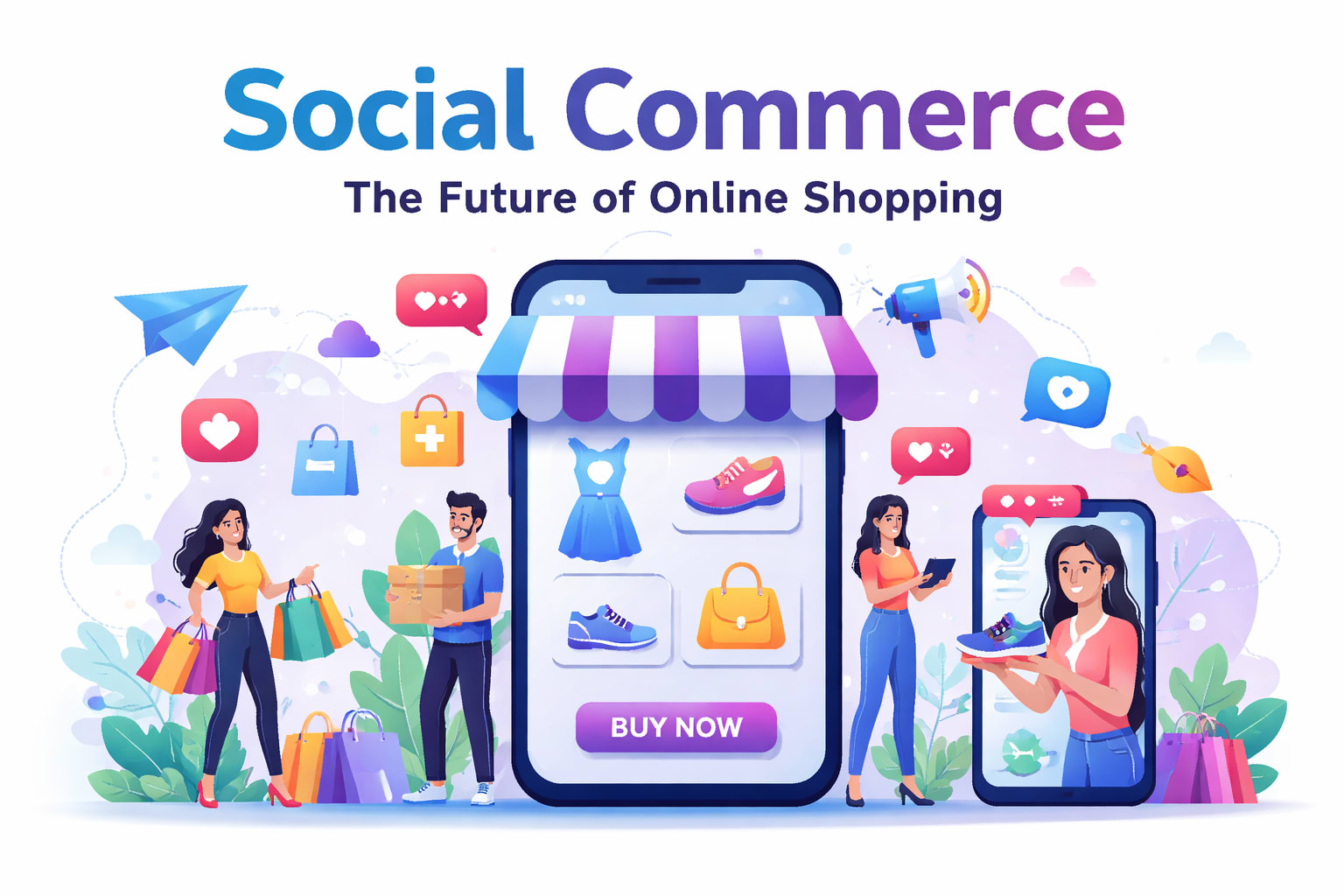
Social Commerce: The Future of Online Shopping
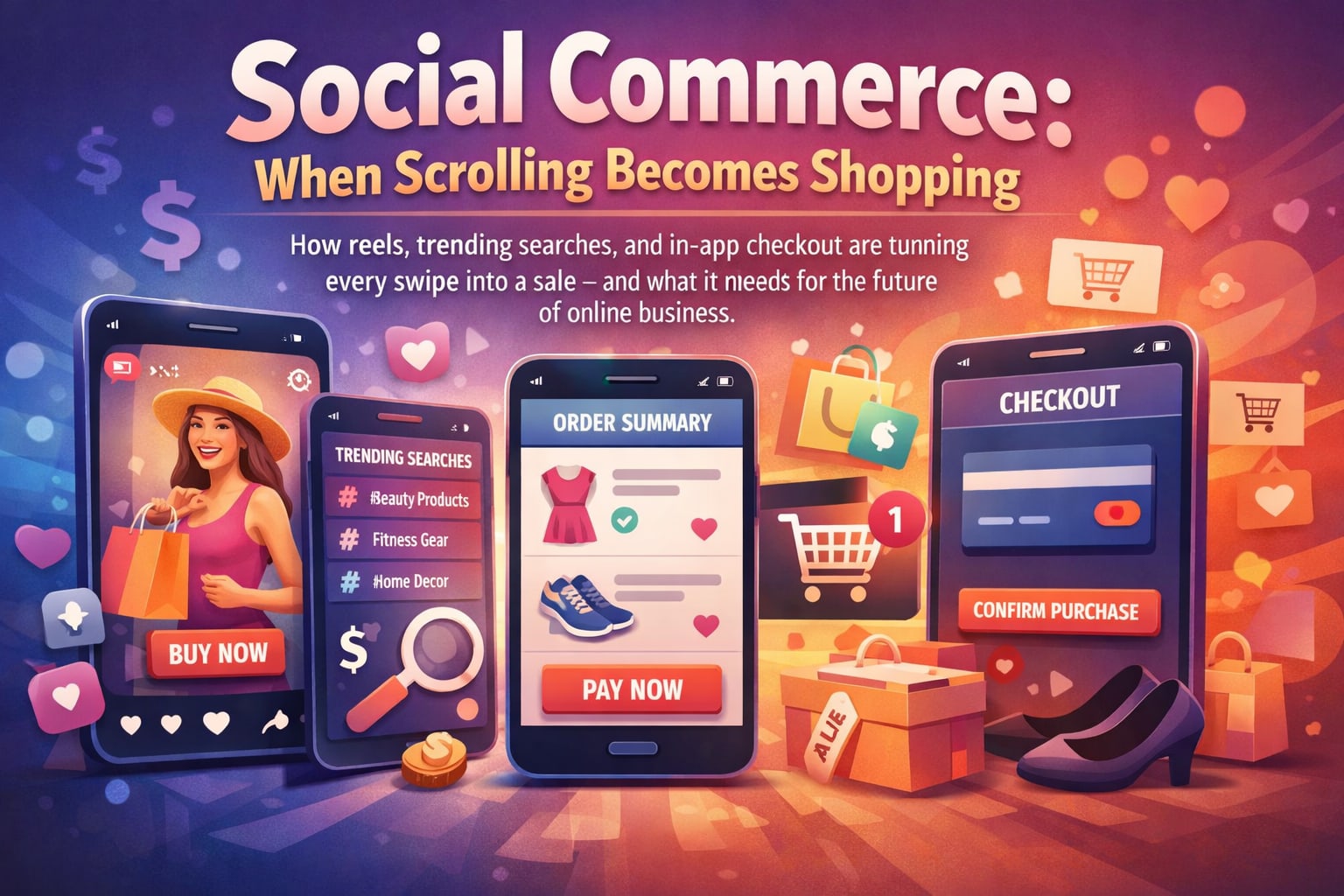
Social commerce is transforming the way people discover and buy products online. Instead of visiting traditional e-commerce websites, users now shop directly through social media platforms like Instagram, Facebook, and TikTok. This shift is turning scrolling into shopping, making online buying faster, more engaging, and highly personalized.
Table of Contents
What is Social Commerce?
Social commerce refers to the process of buying and selling products directly through social media platforms. Unlike traditional e-commerce, where users visit a separate website, social commerce allows users to discover, explore, and purchase products without leaving the app.
Platforms like Instagram Shops, Facebook Marketplace, and TikTok Shop have integrated shopping features that allow brands to showcase products, influencers to promote them, and users to buy instantly. This seamless experience reduces friction and increases conversions.
Social Commerce vs Traditional E-commerce
| Feature | Social Commerce | E-commerce |
|---|---|---|
| Platform | Social Media Apps | Websites & Apps |
| User Journey | Within one app | Multiple steps |
| Discovery | Content-driven | Search-driven |
| Engagement | High (likes, shares) | Low |
The key difference lies in how users interact with products. Social commerce blends entertainment with shopping, making it more interactive and engaging.
Growth of Social Commerce
Social commerce has grown rapidly in the past few years, driven by smartphone usage, high-speed internet, and the popularity of social media platforms. Millions of users now spend hours daily scrolling through feeds, watching reels, and interacting with content.
This behavior has created a massive opportunity for businesses to sell products directly where users already spend their time. Instead of attracting customers to a website, brands now bring the store to the customer.
The rise of influencer marketing has also played a major role. People trust recommendations from influencers more than traditional advertisements, making social commerce highly effective.
How Social Commerce Works
Social commerce works by integrating shopping features directly into social platforms. Businesses create product catalogs, tag products in posts, and enable in-app checkout systems.
- Users discover products through posts, reels, or ads
- They click on tagged products
- View details without leaving the platform
- Complete purchase instantly
This simplified process reduces drop-offs and improves conversion rates significantly.
Popular Social Commerce Platforms
Several platforms are leading the social commerce revolution:
- Instagram: Product tagging, reels, and shop section
- Facebook: Marketplace and business shops
- TikTok: Viral product discovery and live selling
- YouTube: Product links and creator promotions
- Pinterest: Visual discovery and shopping pins
Each platform offers unique features, but all aim to make shopping easier and more engaging.
Benefits of Social Commerce
Social commerce provides several advantages for both businesses and consumers. It simplifies the buying process, improves engagement, and increases trust.
- Faster purchasing process
- Better product discovery
- Higher engagement rates
- Stronger brand connection
- Cost-effective marketing
Impact on Businesses
Businesses are rapidly adopting social commerce to increase sales and reach new audiences. Small businesses especially benefit because they can sell products without investing heavily in website development.
Brands can directly interact with customers through comments, messages, and live sessions, creating stronger relationships and improving customer loyalty.
Changing Consumer Behavior
Consumer behavior has changed significantly with the rise of social commerce. People no longer rely only on search engines to find products. Instead, they discover products while scrolling through social media.
Impulse buying has increased because users can purchase products instantly without leaving the platform. Visual content, reviews, and influencer recommendations strongly influence decisions.
Role of Influencer Marketing in Social Commerce
Influencer marketing is one of the strongest pillars of social commerce. Influencers have built loyal audiences who trust their opinions, recommendations, and lifestyle choices. This trust directly impacts purchasing decisions.
When influencers promote products through reels, posts, or live sessions, it feels more authentic compared to traditional advertisements. This authenticity increases engagement and drives higher conversions.
- Micro-influencers offer niche audience targeting
- Macro-influencers provide large-scale reach
- Content-driven promotions feel natural and engaging
- User trust leads to faster decision-making
Brands are increasingly collaborating with influencers to create relatable content that blends seamlessly into users' feeds, making promotions less intrusive and more effective.
Role of AI and Personalization
Artificial Intelligence plays a crucial role in enhancing social commerce experiences. Platforms use AI algorithms to analyze user behavior, preferences, and interactions to recommend products that are most relevant to each individual.
Personalized feeds ensure that users see products they are more likely to purchase. This increases engagement and improves the overall shopping experience.
- Smart product recommendations
- Behavior-based targeting
- Dynamic ads tailored to users
- Chatbots for instant customer support
AI not only benefits customers but also helps businesses optimize their marketing strategies by providing valuable insights into user behavior.
Live Shopping and Real-Time Selling
Live shopping is one of the fastest-growing trends in social commerce. It combines entertainment with real-time product promotion, allowing sellers to showcase products and interact with viewers instantly.
During live sessions, users can ask questions, see product demonstrations, and make purchases instantly. This creates a sense of urgency and excitement, increasing sales significantly.
- Real-time interaction builds trust
- Instant purchasing options
- Higher engagement levels
- Interactive product demonstrations
Platforms like live streaming apps and short-video platforms are heavily investing in live commerce features to attract both creators and businesses.
Challenges and Risks in Social Commerce
Despite its many advantages, social commerce also comes with certain challenges that businesses and consumers must be aware of.
- Privacy concerns related to user data
- Fake products and scams
- Over-dependence on social platforms
- Algorithm changes affecting visibility
Businesses must ensure transparency and authenticity to build trust, while users should verify sellers before making purchases.
Trust, Security, and User Experience
Trust is a critical factor in social commerce. Since transactions happen within social platforms, users must feel secure while sharing their personal and payment information.
Platforms are continuously improving security measures such as secure payment gateways, verified seller badges, and buyer protection policies.
- Secure payment systems
- Verified seller profiles
- Customer reviews and ratings
- Easy return and refund policies
A smooth and secure user experience encourages repeat purchases and long-term customer relationships.
Future of Social Commerce
The future of social commerce looks extremely promising. With continuous advancements in technology, the line between social media and e-commerce will continue to blur.
Emerging technologies such as augmented reality (AR), virtual reality (VR), and advanced AI will make online shopping even more immersive and interactive.
- Virtual try-ons using AR
- Voice-based shopping
- AI-powered assistants
- More personalized experiences
Social commerce is not just a trend—it is becoming a core part of the digital economy, shaping how businesses operate and how consumers shop.
How to Start Social Commerce (Step-by-Step Guide)
Starting with social commerce does not require a huge investment. With the right strategy and consistency, anyone can build a successful social selling business. Below is a simple step-by-step guide to help beginners get started.
- Choose a Niche: Select a specific category such as fashion, tech, fitness, or beauty.
- Select Platforms: Focus on platforms where your audience is most active.
- Create Quality Content: Use reels, videos, and posts to showcase products.
- Build Trust: Share honest reviews and engage with your audience.
- Enable Shopping Features: Use product tagging and in-app checkout.
- Collaborate with Influencers: Expand your reach through partnerships.
Consistency is key. Regular posting and engagement help build a loyal audience over time.
Effective Marketing Strategies for Social Commerce
To succeed in social commerce, businesses must adopt modern marketing strategies that align with user behavior on social platforms.
- Content Marketing: Create valuable and engaging content regularly
- Short Video Strategy: Use reels and short videos for maximum reach
- User-Generated Content: Encourage customers to share their experiences
- Influencer Collaboration: Partner with creators in your niche
- Paid Advertising: Run targeted ads for better conversions
A strong content strategy combined with consistent engagement can significantly boost visibility and sales.
Role of SEO in Social Commerce
Even though social commerce happens on social platforms, SEO still plays an important role. Optimizing your content helps improve discoverability both on search engines and within social platforms.
- Use relevant keywords in captions and descriptions
- Optimize hashtags strategically
- Write clear and engaging product descriptions
- Create searchable and trending content topics
Combining SEO with social media strategies creates a powerful growth engine for online businesses.
Monetization Opportunities in Social Commerce
Social commerce opens multiple earning opportunities for individuals, influencers, and businesses.
- Direct Product Sales: Selling your own products
- Affiliate Marketing: Promoting products and earning commissions
- Sponsored Content: Collaborating with brands
- Drop Shipping: Selling without holding inventory
- Digital Products: Selling courses, eBooks, or services
With the right strategy, social commerce can become a scalable and sustainable income source.
Common Mistakes to Avoid
Many beginners fail in social commerce due to avoidable mistakes. Being aware of these can help you succeed faster.
- Ignoring audience engagement
- Posting inconsistent content
- Over-promoting without value
- Not building trust
- Ignoring analytics and insights
Focus on building relationships rather than just selling products.
Conclusion
Social commerce is redefining the future of online shopping. By combining social interaction with seamless purchasing experiences, it creates a powerful ecosystem where users can discover, engage, and buy products effortlessly.
Businesses that adapt to this trend early will have a competitive advantage. Whether you are a small business owner, influencer, or entrepreneur, social commerce offers endless opportunities for growth and success.
As technology continues to evolve, social commerce will become even more advanced, interactive, and personalized. Now is the perfect time to explore and leverage its potential.
Frequently Asked Questions (FAQs)
1. What is social commerce?
Social commerce is the process of buying and selling products directly through social media platforms.
2. Which platforms are best for social commerce?
Popular platforms include Instagram, Facebook, TikTok, YouTube, and Pinterest.
3. Is social commerce profitable?
Yes, with the right strategy, it can generate significant income through product sales, affiliate marketing, and brand collaborations.
4. How is social commerce different from e-commerce?
Social commerce allows users to shop directly within social media apps, while e-commerce usually requires visiting a separate website.
5. Can beginners start social commerce?
Yes, anyone can start with minimal investment by choosing a niche, creating content, and engaging with an audience.


Discussion
0 comments
No comments yet. Be the first to share your thoughts!